What a Beginner Cookbook Should Teach First
The first time you burn garlic, undercook chicken, or turn pasta into a sticky lump, it is easy to decide you are just “not a cooking person.” That is exactly the problem a good beginner cookbook should solve. It should not hand you a long list of dishes and hope you figure things out along the way. It should show you what is happening in the pan, what to look for, and what to do when dinner does not go perfectly.
Cooking is not a talent you either have or do not have. It is a set of repeatable skills. Once you understand a few of them, feeding yourself gets less stressful, less expensive, and a lot more satisfying.
A Beginner Cookbook Should Start With Skills, Not Fancy Recipes
Many cookbooks assume you already know how to chop an onion, preheat a pan properly, tell whether meat is cooked, and adjust seasoning. For someone who has mostly relied on delivery, frozen food, or a few familiar meals, those assumptions can make a recipe feel like a test you were never prepared for.
A useful beginner cookbook starts earlier. Before asking you to make a stir-fry or roast a chicken, it explains the small decisions that determine whether those meals work. You need to know why a crowded pan steams food instead of browning it. You need to know that “medium heat” is a starting point, not a universal setting. You need to know that a pinch of salt at the beginning does something different than a pinch at the end.
Recipes matter, but they should be practice. Think of them as short lessons with dinner at the end. A scrambled egg can teach heat control. Roasted vegetables can teach spacing and timing. A simple pasta sauce can teach how salt, acid, and fat work together.
Heat Is the First Big Lesson
Most beginner cooking mistakes come back to heat. The pan is too cold, so food sticks. The pan is too hot, so the outside burns before the center cooks. Or the burner is left on high because high heat seems faster, even when the recipe needs patience.
Start by learning the difference between low, medium, and high heat in your own kitchen. Stove settings vary, pan materials vary, and a gas flame behaves differently from an electric coil or induction burner. That means you will need to pay attention, not just follow a number on a dial.
A good visual cue is more useful than a vague instruction. When oil looks glossy and moves easily around the pan, it is usually ready for sautéing. When onions soften and look translucent, they are ready for the next step. When a chicken breast releases from the pan without force, it has likely developed enough browning on that side.
You do not need restaurant-level precision. You need to get in the habit of watching your food instead of walking away from it.
Learn Knife Safety Before Knife Speed
You do not need a giant knife set or flashy chopping skills to cook well. One sharp chef’s knife, a cutting board that does not slide, and a few safe habits will take you far.
The goal is controlled cutting, not speed. Keep the fingertips of the hand holding the food curled under, with your knuckles guiding the side of the blade. Keep the tip of the knife near the board when you can. If a round vegetable rolls around, cut off a thin slice to create a flat, stable side before you continue.
Sharp knives can sound intimidating, but a dull knife often causes more trouble. It requires extra pressure, slips more easily, and crushes soft ingredients. A sharp blade cuts with less force. That said, sharp does not mean careless. Slow down when you are tired, distracted, or trying a new cut for the first time.
You can also make cooking easier by choosing cuts that fit the meal. Vegetables do not need to be identical little cubes. They do need to be roughly similar in size so they cook at the same rate. That is the practical reason recipes ask for chopped, sliced, diced, or minced ingredients.
Seasoning Is More Than Adding Salt at the Table
Bland food is one of the fastest ways to lose confidence in cooking. You followed the recipe, the food is technically cooked, and somehow it tastes flat. Usually, this is not because you need an expensive spice cabinet. It is because seasoning was treated as a final step instead of part of the cooking process.
Salt brings out flavor, but it works best when added in small amounts as food cooks. Add a little to onions as they soften, another small amount to a pot of soup, and then taste before serving. This gives you more control than dumping in a large amount at the end.
Acid is another beginner-friendly tool. A squeeze of lemon, a splash of vinegar, or a spoonful of yogurt can make a rich or heavy dish taste brighter. Fat carries flavor and creates a fuller texture, whether it comes from olive oil, butter, cheese, avocado, or nut butter. Heat from chili flakes or hot sauce adds energy, but it cannot fix a dish that needs salt or acid.
Taste as you cook when it is safe to do so. This is not cheating. It is how cooks make decisions. If a dish tastes dull, ask what it needs: salt, brightness, richness, or time. Sometimes the answer is simply to let it cook for another few minutes.
Read the Whole Recipe Before You Start
Reading a recipe from top to bottom takes two minutes and can save you from a stressful dinner. You will catch the steps that happen quickly, notice ingredients that need to be divided, and see whether something needs to marinate, rest, or cook longer than expected.
Before turning on the stove, pull out the ingredients and tools you need. Chop what can be chopped. Measure spices. Put a bowl nearby for scraps. This simple setup is often called mise en place, but you do not need to use the French phrase to benefit from it. The point is to avoid searching for garlic powder while your onions burn.
Pay attention to active time versus total time. A sheet-pan meal may only require 15 minutes of work, but it might need 35 minutes in the oven. A skillet dinner may move quickly once you begin. Knowing the difference helps you plan around work, errands, and hungry roommates.
Build a Small Kitchen That Works
A beginner does not need every gadget in the kitchen aisle. In fact, too much equipment can make a small apartment kitchen harder to use. Start with dependable basics: a chef’s knife, cutting board, skillet, saucepan, sheet pan, mixing bowl, measuring cups and spoons, can opener, spatula, tongs, and instant-read thermometer.
The thermometer deserves special attention. It removes guesswork when you are cooking chicken, pork, burgers, fish, or leftovers. Color and texture can help, but temperature gives you a clearer answer. It is one of the cheapest ways to feel more certain in the kitchen.
For pantry shopping, choose ingredients you will actually use. Rice, pasta, canned beans, canned tomatoes, cooking oil, salt, pepper, garlic powder, onions, eggs, and a few frozen vegetables can support many simple meals. Your best pantry is not the one that looks impressive. It is the one that helps you make dinner on a Tuesday night.
Practice the Same Techniques in Different Meals
Confidence comes from repetition, not from cooking a completely new dish every night. If you learn to sauté vegetables for tacos, use that same skill for pasta, grain bowls, omelets, or fried rice. If you learn to roast chicken and vegetables, you can change the seasoning and make the meal feel different without learning a whole new method.
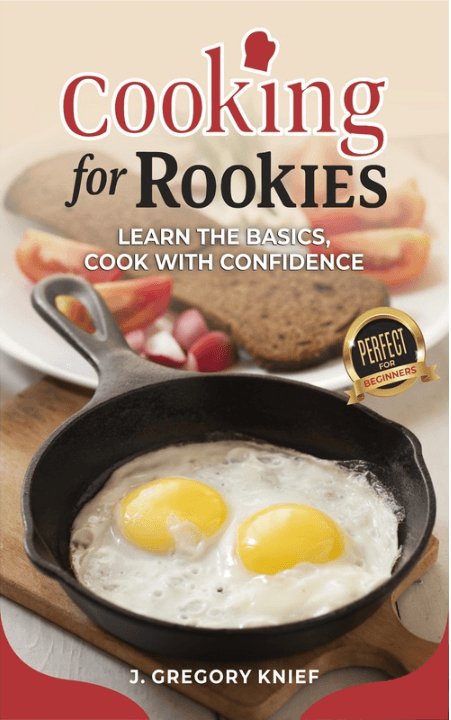
This is where a skills-first beginner cookbook earns its place. Cooking For Rookies, for example, pairs foundational instruction with approachable practice recipes, so you are not left trying to decode basic techniques alone. The goal is not to impress anyone with complicated food. The goal is to help you make a meal you understand well enough to make again.
Give yourself permission to repeat meals while you learn. Change one thing at a time: use broccoli instead of green beans, swap rice for potatoes, or try a different spice blend. Small changes teach you more than randomly collecting complicated recipes.
When a Meal Goes Wrong, Use It as Information
Every cook makes mistakes. The difference is that experienced cooks have learned what those mistakes mean. If vegetables are pale and watery, the pan may have been crowded. If a sauce tastes harsh, it may need more time, fat, or a little sweetness. If rice is crunchy, it likely needs more liquid or more covered cooking time.
Not every meal can be saved, and that is fine. Burned food should not become a punishment. Toss it, make eggs or a sandwich, and try again another day. One rough dinner does not erase the progress you made by planning, chopping, and getting food into a pan.
Start with a few simple meals, pay attention to what changes as they cook, and let repetition do its job. Before long, “I can’t cook” starts to sound less like a fact and more like an old story you no longer need to tell yourself.

Hi, I'm Greg!
I’m an American Chef, Husband and Dad who started cooking at a young age and continues to cook personally to this day. Graduated from Johnson & Wales College Culinary Arts Program and have cooked in several restaurants in different cuisines over the course of my cooking career.



JOIN MY MAILING LIST
Created with © systeme.io